
Refill Adherence
In a real-world study, Patients stayed on VUMERITY with a >90% rate of refill adherence over 14 months1
16-month study results
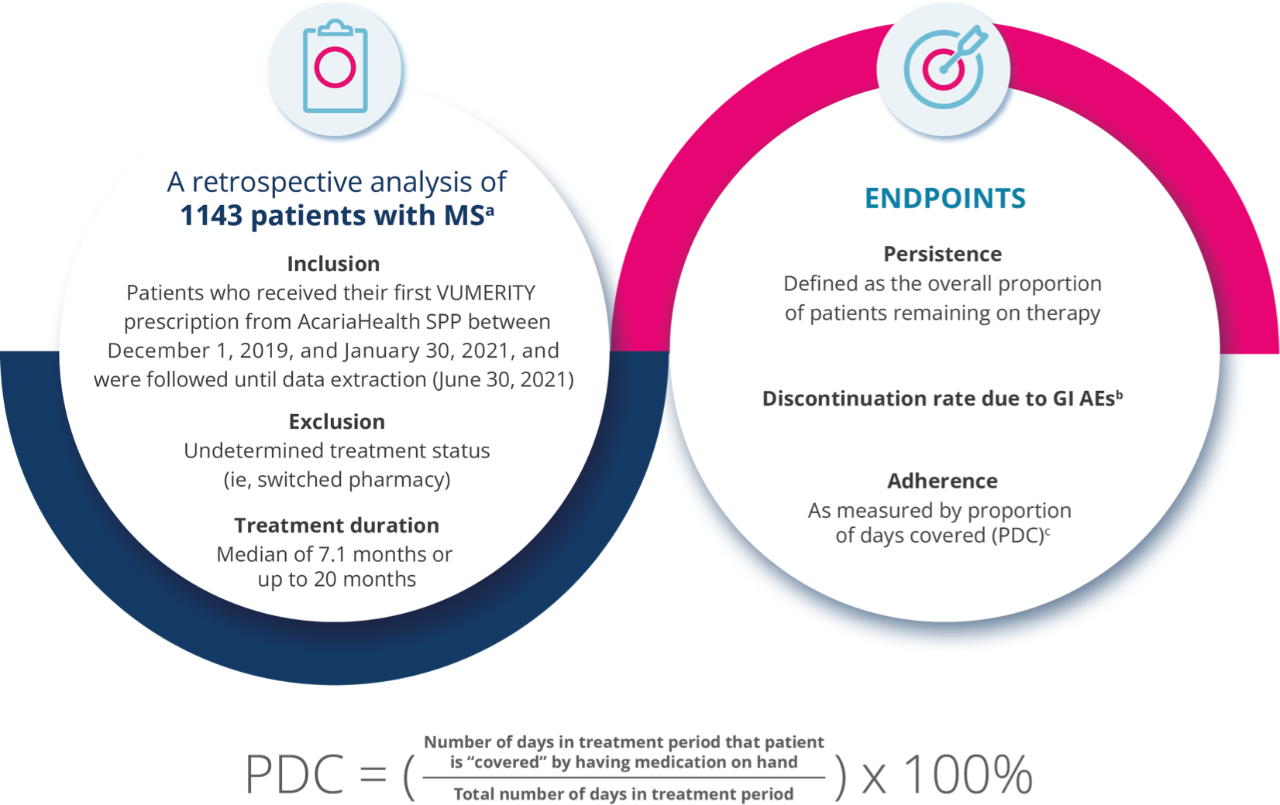

Limitations and disclosures
- The AcariaHealth SPP lacks detailed baseline data required for comparative analyses vs other DMTs. Also, the exact MS subtype cannot be discerned from this database2
- While PDC measures timely refilling and whether the patient has access to the drug, it cannot definitively determine if a patient is taking each dose of medication as directed2
- Short follow-up period (median duration of VUMERITY treatment was 7.1 months)1
aAll patient information was anonymized, and patient confidentiality was maintained through compliance with Health Insurance Portability and Accountability Act (HIPAA) regulations. Information on patients’ prior DMT use was based on pharmacy records.2
bAny unidentified AE that led to discontinuation within 90 days of starting VUMERITY was counted as a GI AE, to avoid underestimation of discontinuation rate.2
cPDC is widely accepted as a valid measure of patient adherence and is the preferred method for assessing adherence by the Pharmacy Quality Alliance for use in the Medicare plan Star Ratings.2
Patients maintained high adherence to VUMERITY prescription refills in both the overall population (mean PDC 90.8%) and the DMF-switch subgroup (mean PDC 90.7%)1
Patients on VUMERITY demonstrated high rates of refill adherence
by PDC in the overall population1
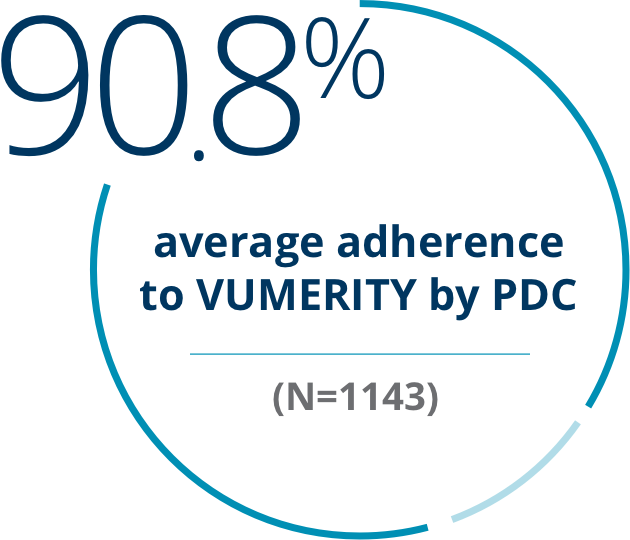
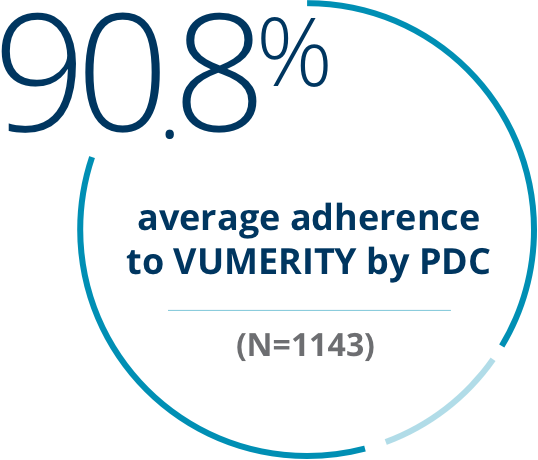
PDC is the preferred method for assessing adherence by the Pharmacy Quality Alliance for use in the Medicare plan Star Ratings2
Study was funded by Biogen.
82.3% of patients remained persistent on VUMERITY over 16 months
Persistence to VUMERITY in the overall study population
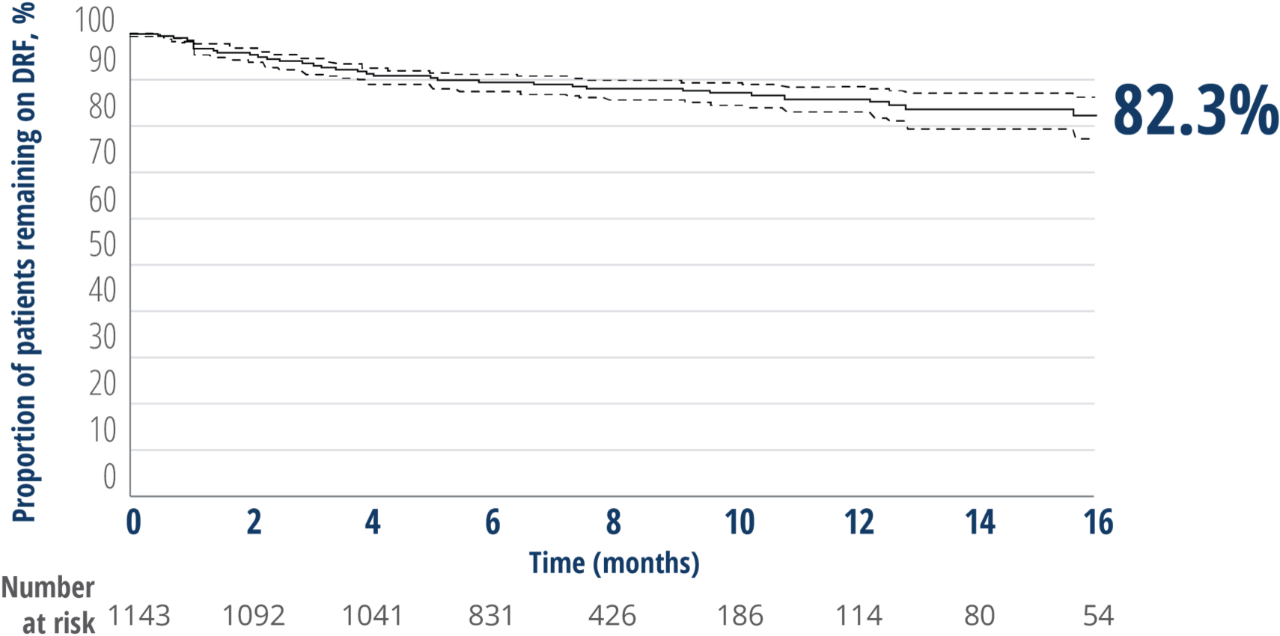
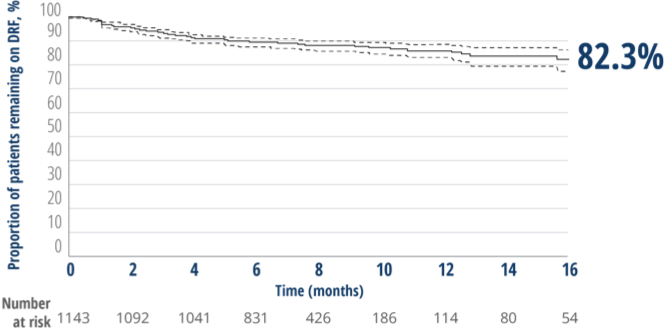
- Dashed lines represent 95% confidence intervals.1
Study was funded by Biogen.
4.5% discontinuation rate due to GI AEs with VUMERITY in the overall study
population1
Treatment discontinuation rate and discontinuation due to GI AEs


- Only 15 of the 433 patients (3.5%) who switched from DMF to VUMERITY discontinued VUMERITY due to GI AEse
- 41.6% (37/89) of patients who switched from DMF to VUMERITY for a known reason did so due to GI tolerability issuese
>90% of the patients who switched to VUMERITY from DMF stayed on VUMERITY at the time of the study1
dIn the overall population, other non-GI-related reasons for DRF treatment discontinuation included “other AE” (n=69), “physician decision–pursuing alternate therapy” (n=9), “lack of efficacy” (n=6), and “patient decision–pursuing alternate therapy” (n=1).
eIn the DMF-to-DRF subgroup, other non-GI-related reasons for DRF treatment discontinuation included “other AE” (n=14) and “lack of efficacy” (n=2).
Study was funded by Biogen.
The study population consisted of real-world VUMERITY patients
75.2% of patients were women, and the median age was 51 years
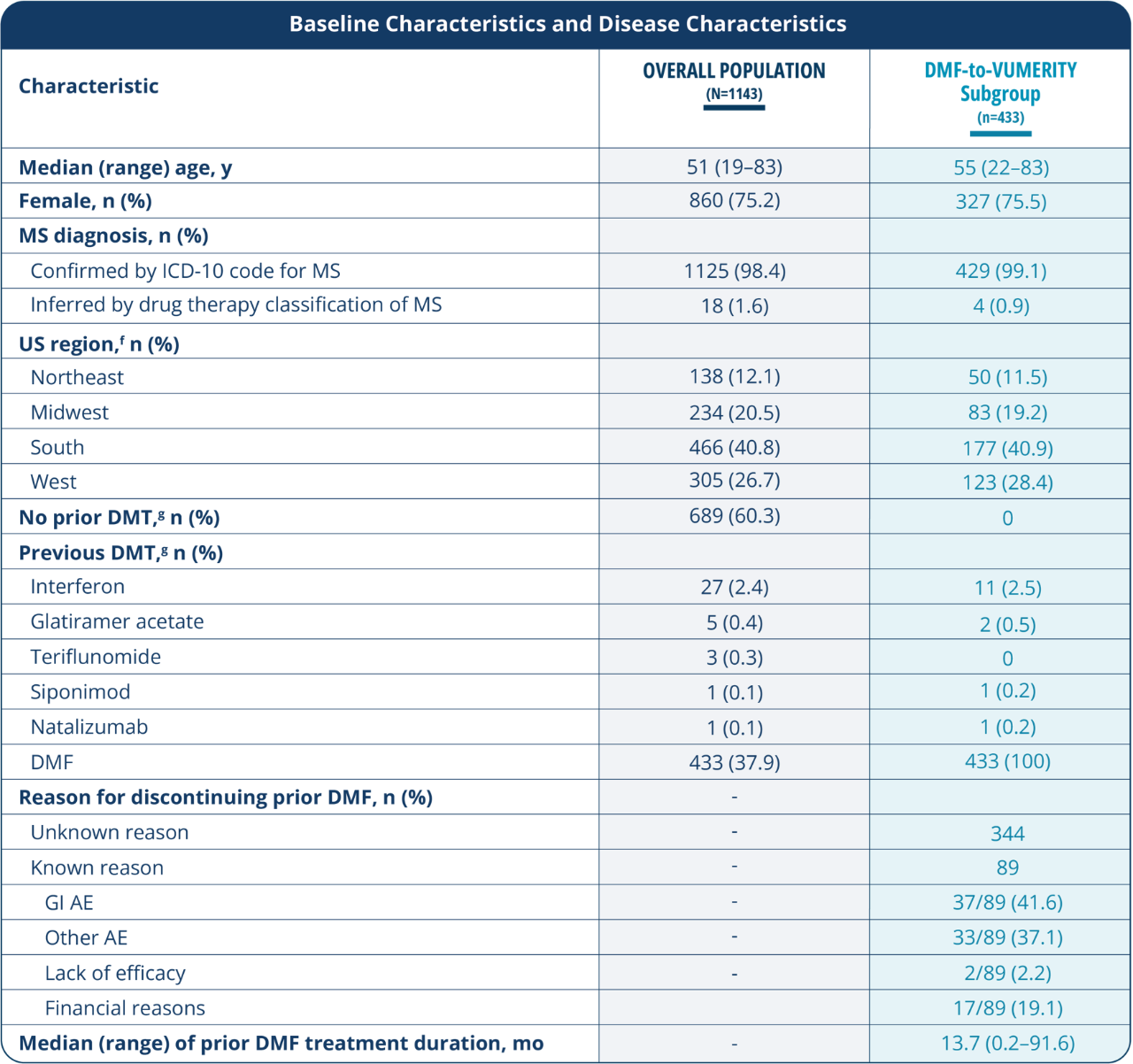

- Patients were treated for a median duration of 7.1 months
fRegional breakdown based on 2020 US Census categories for region.2
gBased on pharmacy records.1
Study was funded by Biogen.